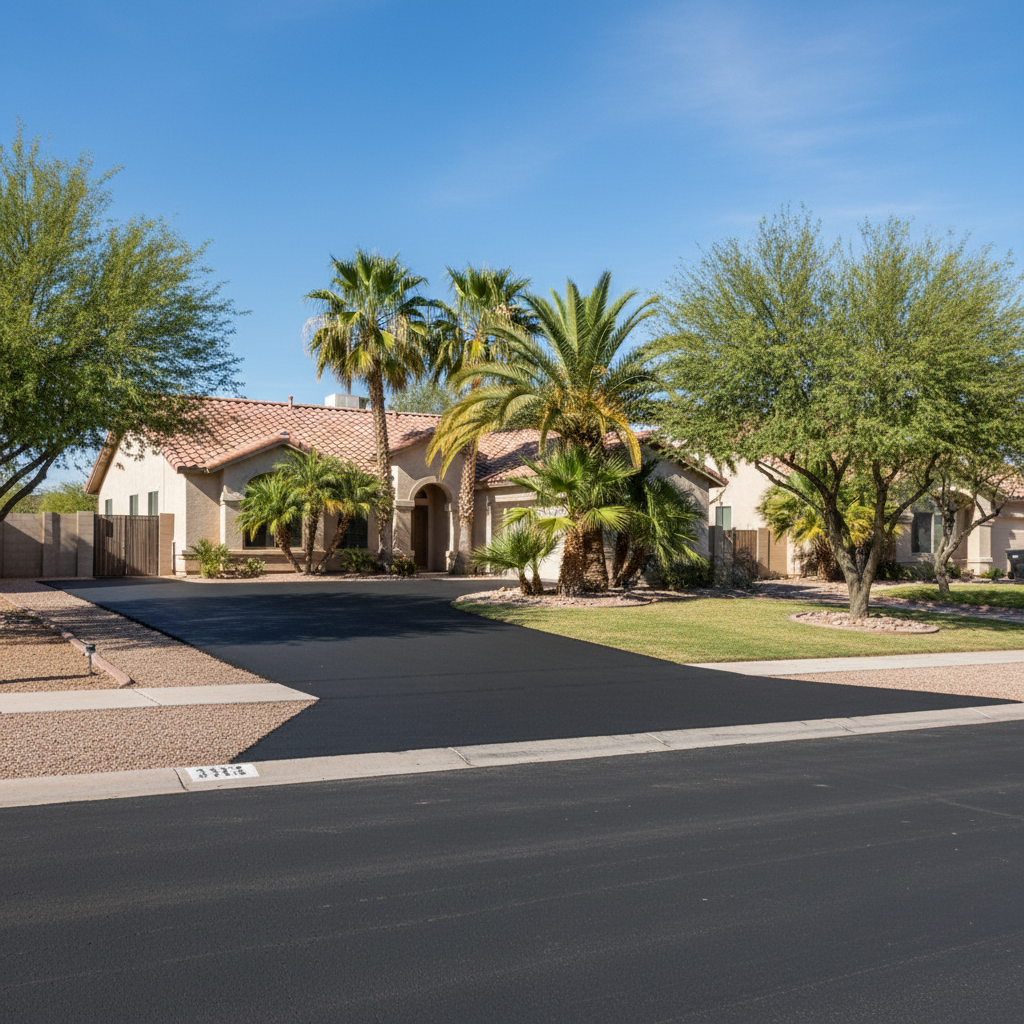
Your asphalt driveway takes a beating out here in the desert. Between triple-digit summer afternoons in Arcadia and the occasional monsoon downpour, your pavement has to deal with brutal conditions. Yet, property owners make the exact same planning mistakes over and over before an asphalt paving project even starts. Here is what you need to watch out for so you do not end up tearing out a brand-new driveway in two years.
Ignoring the Subgrade Preparation
Too many property owners think Asphalt Paving is just about pouring hot mix over whatever dirt is currently in front of their garage. That is a major mistake, especially with the expansive caliche and clay soils we deal with across the Valley. If the subgrade is not properly graded, compacted, and tested, your new asphalt is going to crack and shift no matter how thick it is. Omega Paving spends most of our time on the dirt work before a single ton of asphalt arrives. If a crew shows up and rushes the prep work, you should tell them to stop.
Paving in the Dead of Summer Without Adjusting
Omega Paving performs Asphalt Paving year-round in Phoenix, but you cannot treat July the same way you treat January. Laying hot mix when surface temperatures are pushing 140 degrees creates massive cooling challenges. The material can stay too soft for too long, or worse, cool down improperly while being rolled. You need a crew that knows how to adjust oil specs and rolling patterns for the desert heat. If an unqualified contractor tells you the heat does not change how they lay asphalt, you should find a different team.
Skimping on Thickness for Heavy Loads
Your standard residential car does not weigh that much, but what happens when you have a delivery truck, a large RV, or a heavy trailer parked on the edge of that driveway? A standard two-inch overlay is not going to cut it if your base is not solid or your traffic load is heavier than average. Think about how you actually use your property before you agree to the thinnest, cheapest quote on the table. Saving a few hundred bucks upfront on material thickness usually turns into a multi-thousand-dollar replacement bill down the road.
Forgetting About Drainage in the Monsoons
People forget it actually rains here, and when it does, it pours. Standing water is asphalt's worst enemy. If your driveway does not pitch correctly toward the street or an alley, water will pool against your garage foundation or sit on the surface, softening the binder. Make sure whoever you hire checks the water flow with a level before laying down the final mat.
Doing Asphalt Paving right the first time takes patience and a crew that knows local soil and weather patterns inside and out. Take your time, ask tough questions about the prep work, and do not let a lowball bid rush you into a bad choice.