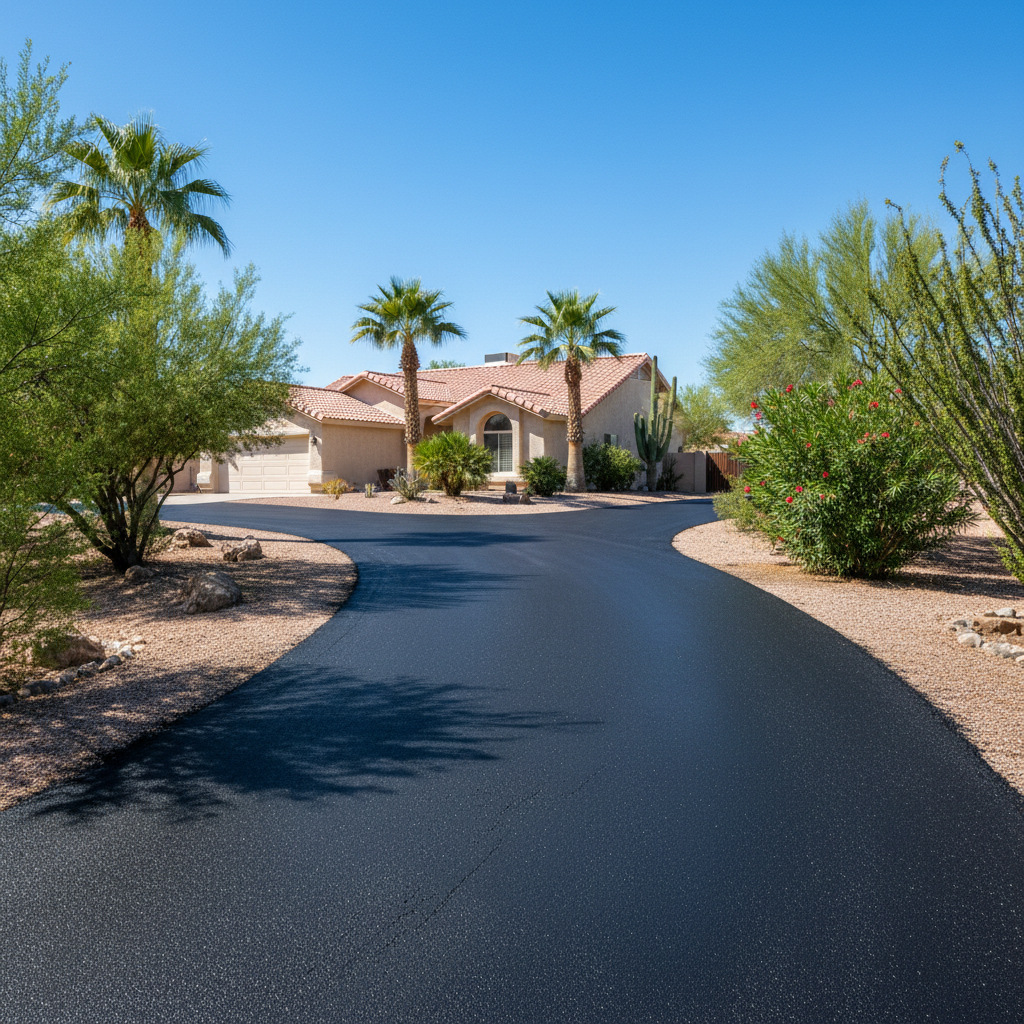
So, when's the best time to slurry coat your asphalt driveway here in Phoenix? That's a question I hear a lot, and for good reason. Our desert climate isn't like anywhere else, really. What works for a driveway in, say, Seattle, just won't cut it here. Getting the timing right for your slurry seal isn't just about convenience; it's about making sure that protective layer actually does its job and lasts.
Why Phoenix Weather Matters for Slurry Seal
You know how brutal our summers are. We're talking 115-degree days, sometimes for weeks on end. That kind of heat bakes the oils right out of your asphalt, making it brittle and prone to cracking. Then we get our monsoon season, with those sudden, heavy downpours that can wash away loose aggregate. Winter brings cooler temps, but we still get plenty of sun. It's a constant battle against the elements for your pavement.
Slurry seal is basically a protective layer — a mix of asphalt emulsion, aggregate, and water — that goes over your existing asphalt. It fills minor cracks, puts those lost oils back, and gives your driveway that fresh, black look. But if you put it down at the wrong time, it won't cure properly, and you'll just be throwing money away. I've seen it happen too many times, especially with people trying to DIY it or hiring someone who doesn't understand our specific conditions.
The Best Time to Schedule Your Slurry Coat
Hands down, the sweet spot for slurry coating in Phoenix is during our cooler, drier months. Think late fall, winter, and early spring. Here's why:
- Fall (October - November): The intense summer heat starts to back off, but the ground is still warm enough for proper curing. Humidity is generally low, which is ideal. You're past the worst of the monsoons, so you're less likely to get an unexpected downpour messing up a fresh application.
- Winter (December - February): This can be a good time, especially if we have a mild winter. The key here is daytime temperatures. You need consistent daytime highs of at least 60 degrees Fahrenheit, and ideally, no overnight lows dipping below 40 degrees for a few days after application. If it's too cold, the emulsion won't break and cure correctly. That leaves you with a soft, tacky surface that just won't hold up.
- Early Spring (March - April): Similar to fall, this is another prime window. Temperatures are climbing, but we haven't hit the extreme summer heat yet. You're generally looking at dry conditions, which is exactly what a slurry seal needs to set up right.
What you absolutely want to avoid is coating in the peak of summer (May through September). It's just too hot. The material can flash cure too quickly, leading to premature cracking or an uneven finish. Plus, the risk of monsoon storms is much higher, and you definitely don't want rain on a fresh seal coat.
Weather Conditions: More Than Just Temperature
It's not just the season; it's the specific weather on the day of, and days following, the application. Here's what I'm looking for when Omega Paving schedules a job:
- Temperature: Like I said, consistent highs above 60°F are crucial. Below that, the curing process slows down dramatically, and the material might not bond well.
- No Rain in Forecast: This is non-negotiable. Slurry seal needs at least 24-48 hours, sometimes longer, of dry weather to cure properly. Rain on a fresh coat will ruin it, washing away the material and leaving you with a mess. I always check the forecast religiously.
- Low Humidity: While not as critical as temperature or rain, lower humidity helps the water in the emulsion evaporate faster, speeding up the cure. We usually have pretty low humidity here, which is a plus.
- Wind: Strong winds can cause problems. They can dry the surface too quickly before the underlying layers have cured, or blow debris onto the wet surface. A calm day is always preferred.
Protecting Your Investment Year-Round
Once your slurry coat is down and cured, you've taken a big step in protecting your driveway. But the work isn't over. Here's how to make sure that investment lasts:
- Keep it Clean: Sweep off dirt, leaves, and other debris regularly. Don't let oil or gas spills sit; clean them up immediately with an absorbent material and then wash the area with a mild detergent.
- Avoid Heavy Loads: Try not to park heavy RVs or trucks on your driveway for extended periods, especially in the summer. The weight combined with the heat can cause depressions.
- Watch for Cracks: Even with a slurry coat, new cracks can form over time. Address them quickly with an asphalt crack filler. Small cracks are easy to fix; ignored cracks become big problems.
- Reapply as Needed: A good slurry coat typically lasts 3-5 years in our climate, depending on traffic and how well it was applied. Keep an eye on it. When it starts to look faded, or you see more aggregate showing through, it's time to consider another application. Don't wait until your driveway is falling apart.
Taking care of your asphalt driveway in Phoenix is a bit different than other places, but it's definitely doable. Get the timing right for your slurry seal, pay attention to the weather, and then do a little maintenance. You'll keep your driveway looking good and performing well for years to come.