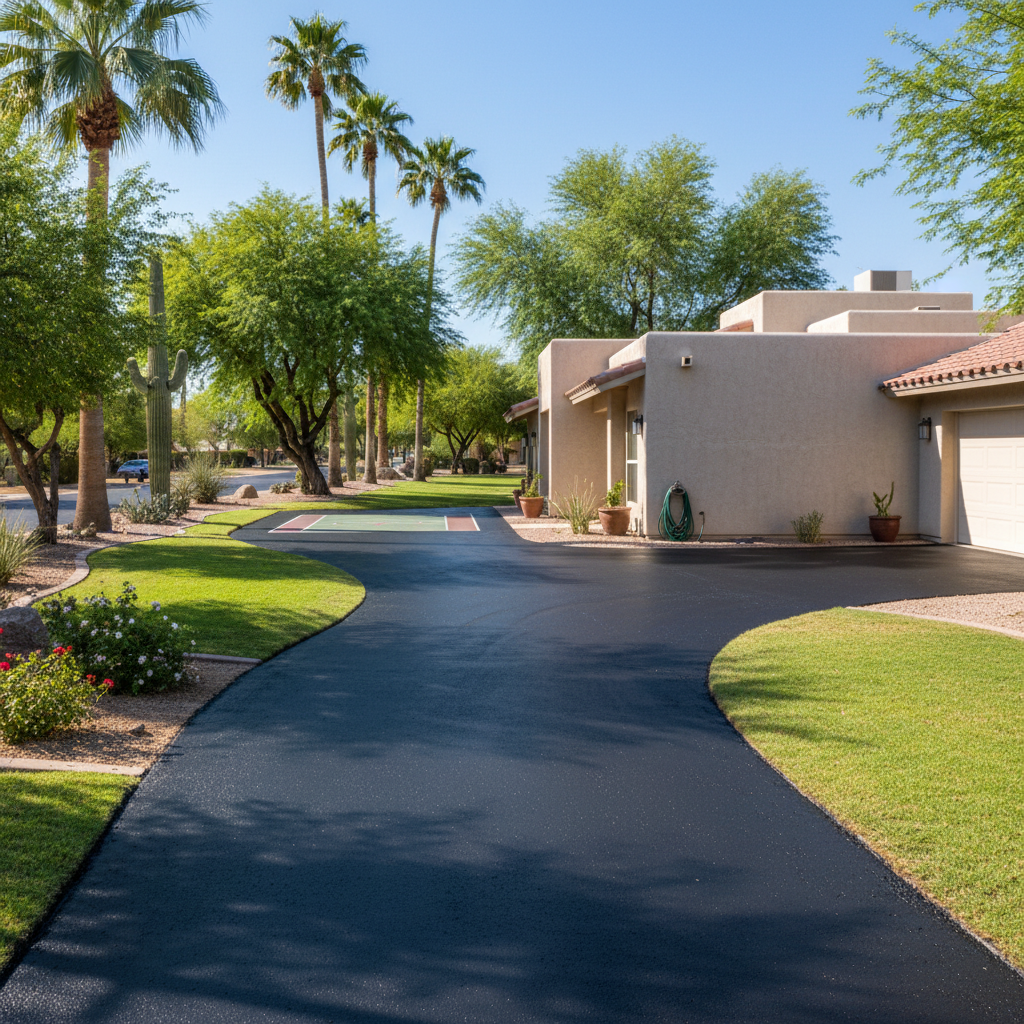
When's the best time to slurry coat your asphalt driveway here in Phoenix? It's a question I get a lot, and for good reason. Our desert climate isn't like most places; it really dictates when and how you should protect your asphalt. You can't just pick a random weekend and expect the best results. Getting the timing right means your investment lasts longer and looks better, plain and simple.
Understanding Phoenix Weather & Your Slurry Coat
Our summers are brutal, and our winters are mild, but both extremes affect how a slurry coat cures and performs. I'm talking about those 115-degree days that feel like an oven, and even those cooler, dry winter mornings. Slurry coating isn't just about slapping some black stuff down; it's a chemical process that needs specific conditions to bond properly with your existing asphalt.
When to Schedule: The Sweet Spot
From what I've seen over the years, the absolute best times to get your slurry coating done in Phoenix are generally late fall, winter, and early spring. Think October through April. Why then? Because the temperatures are usually in that ideal range—not too hot, not too cold. You want consistent daytime temperatures between 60 and 90 degrees Fahrenheit, with nighttime lows not dipping below 45-50 degrees. This allows the water in the emulsion to evaporate at a steady rate, letting the coat cure evenly and strongly. If it's too hot, it can dry too fast, leading to cracking or a weaker bond. Too cold, and it won't cure at all, leaving you with a soft, easily damaged surface.
We also have to watch out for those unexpected rain showers, especially during monsoon season. You absolutely cannot apply slurry if there's a chance of rain within 24-48 hours of application. Water will wash it right off or prevent it from curing properly, making all that effort and money a waste. So, while monsoon season (July-September) might have some cooler days, it's generally a risky time because of the unpredictable downpours.
Protecting Your Investment Year-Round
Once your driveway is freshly coated, the work isn't entirely over. You've got to protect that investment, especially with our intense Phoenix sun. Here's what you need to keep in mind:
- Keep it Clean: Regularly sweep or blow off debris like leaves, dirt, and gravel. These can grind into the surface with foot or vehicle traffic, causing premature wear.
- Watch for Oil & Chemical Spills: Our desert soil is pretty absorbent, but asphalt isn't. Oil, gas, and other automotive fluids are asphalt's worst enemy. They break down the binder, leading to soft spots and potholes. Clean them up immediately with an absorbent material and a mild detergent. Don't let them sit.
- Avoid Heavy Loads & Sharp Turns: For the first few days after application, try to avoid parking heavy vehicles or making sharp, sudden turns on your newly coated driveway. This is especially true for the first 24-48 hours while it's still fully curing. Even after that, excessive stress can wear it down faster.
- Mind the Edges: The edges of your driveway, especially where it meets landscaping or dirt, are often the first to show wear. Keep vegetation trimmed back and consider a small border to help protect those vulnerable areas from erosion or damage.
- Re-apply as Needed: A good quality slurry coat, properly applied by folks like us at Omega Paving, should last you a few years. But it's not a one-and-done deal for life. I usually recommend re-evaluating your driveway every 2-3 years. If you start seeing aggregate showing through, fading, or minor cracking, it's probably time for another coat. Don't wait until it's falling apart; preventative maintenance is always cheaper than major repairs.
Taking a little extra care and understanding our unique Phoenix climate goes a long way in making your asphalt driveway last. It's not just about looking good; it's about protecting your property and avoiding bigger headaches down the road.