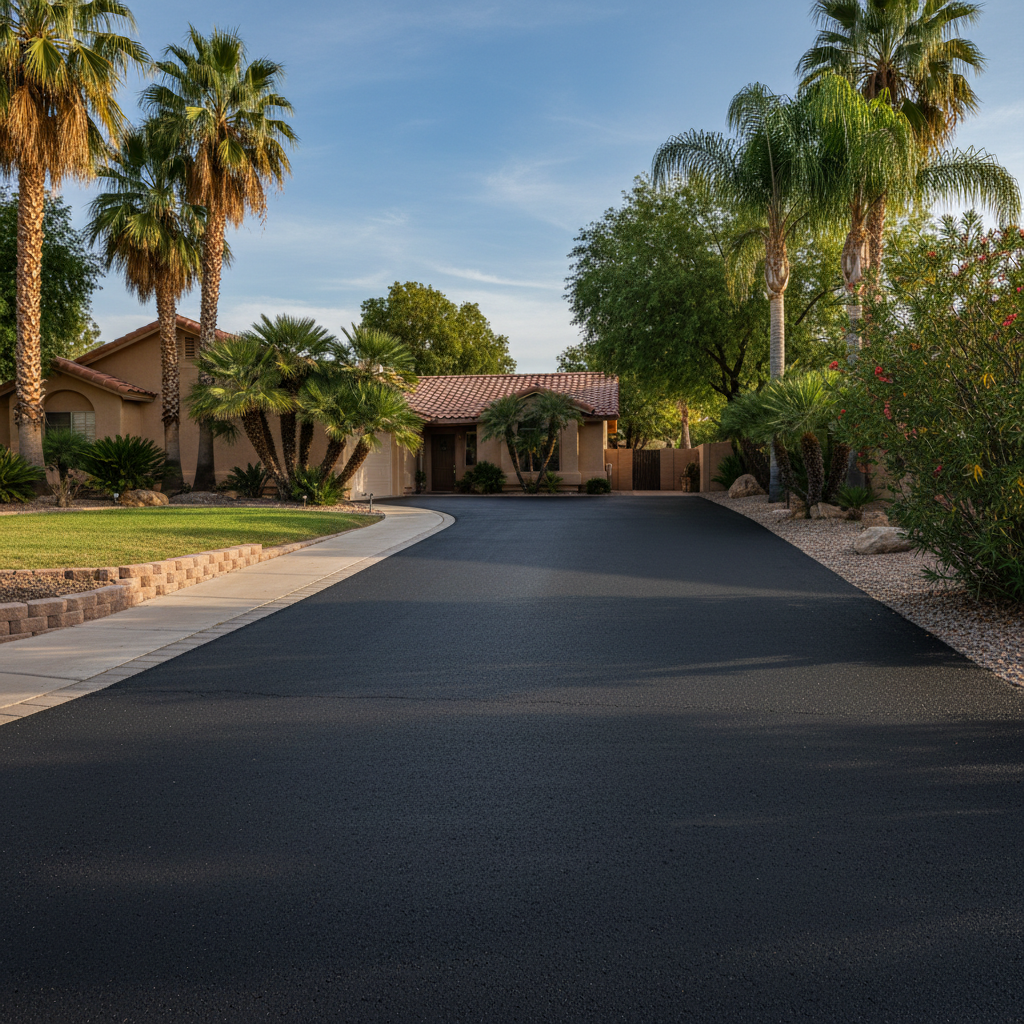
Alright, let's talk about sealcoating. You've got an asphalt driveway, and you know it needs some love to stand up to our Phoenix sun and heat. Good for you. But before you just pick the first guy with a truck and a sprayer, you need to know what you're doing. I've been in this business a long time, and I've seen homeowners make the same mistakes over and over again when it comes to sealcoating. Let's make sure you don't join that club.
Mistake #1: Waiting Too Long (or Not Long Enough)
This is a big one. Some folks wait until their driveway looks like a cracked desert floor before they even think about sealcoating. By then, it's often too late for a simple sealcoat to do much good. You're looking at more expensive repairs or even a full repave. Sealcoating is preventative maintenance, not a miracle cure for a crumbling driveway.
On the flip side, I've seen people get a brand new asphalt driveway and want to sealcoat it next week. Hold your horses! New asphalt needs time to cure, usually 6 to 12 months, sometimes even longer depending on the mix and the weather. If you sealcoat too soon, you're trapping in oils and solvents that need to evaporate, which can lead to premature cracking and a weak surface. A good contractor will tell you to wait.
Mistake #2: Focusing Only on Price
I get it, everyone wants a good deal. But when it comes to something like your driveway, the cheapest bid is rarely the best. Think about it: what corners are they cutting to be that cheap? Are they using watered-down material? Are they skipping proper prep work? Are they even insured?
Here's what often happens with those super low bids: they'll use a cheap, thin, or improperly mixed sealer. It might look okay for a month or two, but then it fades, peels, or offers no real protection. You'll be calling someone else (maybe Omega Paving, if you're lucky) to fix it way sooner than you should have to. You end up paying twice. Ask for references, check their reviews, and make sure they're legitimate. A reputable company will stand behind their work and use quality materials.
Mistake #3: Ignoring the Prep Work
This is probably the most critical step, and it's where a lot of contractors cut corners. Sealcoating isn't just spraying black stuff on your driveway. The surface needs to be clean, dry, and free of debris. If there are cracks, they need to be filled properly. Oil spots? They need to be primed or treated so the sealer adheres. If you don't do this, the sealer won't bond, and you'll get peeling, flaking, and an overall poor finish.
I've seen guys just blow off a driveway with a leaf blower and call it good. That's not good. You need power washing, scrubbing, and proper crack filling. Especially here in Phoenix, with our dusty conditions and the way the sun bakes everything, thorough cleaning is non-negotiable. If a contractor rushes the prep, that's a huge red flag.
Mistake #4: Not Asking About the Material
There are different types of sealers out there. Some are coal tar based, some are asphalt emulsion based, and then there are acrylics. Each has its pros and cons, and some are better suited for our climate than others. A good contractor will be able to explain what they're using, why they're using it, and what kind of coverage and longevity you can expect.
Don't be afraid to ask for the product name or even a spec sheet. If they get cagey or just say