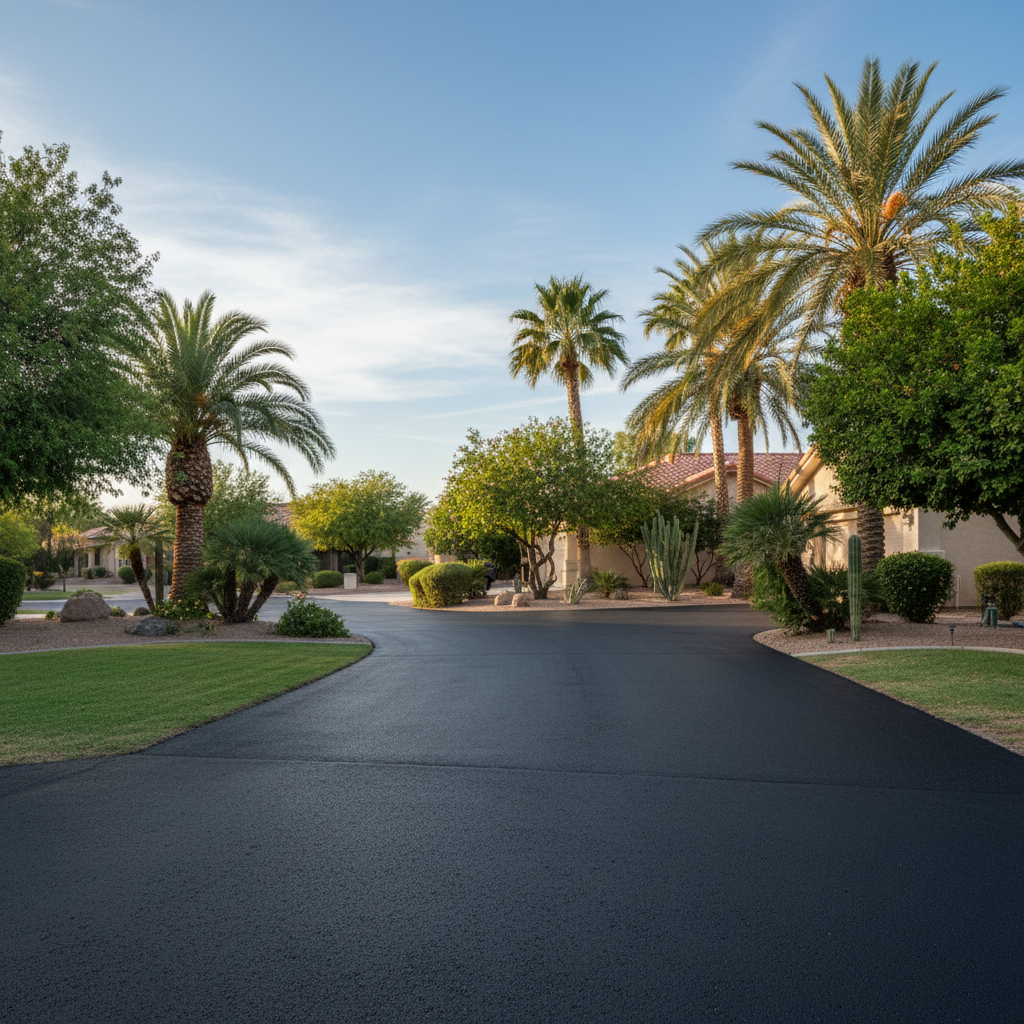
So, you've gotten some asphalt repairs done, maybe a small pothole patched or a bigger section replaced. Good for you — taking care of your property is smart! But getting the repair finished? That's really only half the battle, especially here in Phoenix. If you don't keep an eye on things, that desert sun and our monsoon rains will chew right through your investment faster than you can even say 'dust devil'.
Making Your Asphalt Repairs Last Longer
You want those repairs to hold up, right? Of course you do. The trick is understanding what makes asphalt fail here in Arizona, then doing what you can to fight it. It mostly comes down to two things: water and UV radiation.
- Sealcoating is Your Best Friend: I honestly can't stress this enough. After a repair, especially if it's just a patch, you really should think about sealcoating the whole area, or at least the repaired spot, once it's had a chance to cure properly. Sealcoat works like sunscreen for your asphalt. It blocks those harsh UV rays that dry out the binder, which makes the asphalt brittle and more likely to crack. Plus, it creates a barrier against water getting in, and that's super important.
- Proper Drainage is Non-Negotiable: If water is just sitting on or near your repaired area, you've got a problem. Water seeps into cracks, expands when it heats up, and slowly undermines the base. If you see standing water after a repair, you need to fix the drainage issue itself, not just keep patching over it. This is particularly true for places like the Arcadia Lite neighborhood, where older driveways might have settled over time.
- Keep it Clean: Sounds simple, I know, but debris, dirt, and oil spills can really mess up your asphalt. Oil and gas are petroleum-based, just like asphalt, and they'll soften and break down the binder. So, sweep regularly, and clean up spills right away with something absorbent.
- Watch the Weight: Heavy vehicles, especially if they sit in one spot for a long time, can stress repaired areas. If you've got a big RV or a commercial truck, try to spread out the weight or park it on a sturdier surface if you can.
Regular Maintenance: Your Asphalt's Check-Up
Think of your asphalt like your car; it needs regular check-ups to stay in good shape. You wouldn't wait for the engine to seize before changing the oil, would you?
- Monthly Visual Inspection: Just walk around your property. Look for new cracks forming, especially around the edges of earlier repairs. Are there any soft spots? Does the surface look faded or chalky? Catching small problems early is always cheaper and easier than waiting for them to become big, ugly messes.
- Crack Filling: This is probably the most important regular maintenance task you can do. Any new cracks, even tiny hairline ones, need to be filled quickly. A good quality hot-pour crack filler will stop water from getting into the sub-base, which is the number one reason asphalt fails. Don't let those little guys turn into big, expensive headaches.
- Sealcoating Schedule: Depending on how much traffic it gets, sun exposure, and how good the last sealcoat was, you'll generally want to re-seal every 2-4 years. For busy commercial lots or areas that get a lot of sun, like a south-facing driveway in Scottsdale, you might lean towards resealing more often.
Warning Signs You Can't Ignore
Your asphalt will tell you when it's hurting; you just need to know what to look for. These are the red flags:
- Alligator Cracking: This looks like a bunch of interconnected cracks, kind of like an alligator's skin. It's a sign of structural failure underneath, often because of a weak base or repeated heavy loads. A simple patch won't cut it here; you're looking at a much bigger repair.
- Potholes: Obvious, I know, but a pothole is usually what happens after alligator cracking or an ignored crack that let water get in and erode the base. Don't let them just sit there; they'll only get bigger and cause more damage.
- Raveling: This is when the aggregate (the small stones) starts to come loose from the asphalt binder, making the surface look rough and pitted. It usually means the asphalt is drying out and losing its flexibility, often from sun damage.
- Upheaval or Depressions: If parts of your asphalt are rising or sinking, that's a serious sign of sub-base issues. It could be expansive clay soils reacting to moisture, tree roots, or even plumbing leaks underneath. This definitely needs immediate attention.
- Fading and Discoloration: While not a structural issue by itself, a faded, gray asphalt surface tells you that the binder is oxidizing and losing its protective qualities. It's a clear signal that it's time for sealcoating to bring back its health and appearance.
When to Call a Professional
Look, I'm a big believer in homeowners tackling what they can, but there are definitely times when you need to bring in the pros. Trying to DIY a major repair can often cost you more in the long run than just hiring someone to do it right the first time.
- Large-Scale Alligator Cracking: If you've got a significant area of alligator cracking, especially if it's deep, you're past a simple patch. You probably need a full-depth repair, which means removing the damaged asphalt and base, then rebuilding it. That's heavy equipment work.
- Potholes with Undermining: If a pothole is deep, wide, and you can see that the base material underneath is compromised or wet, it needs more than just throwing some cold patch in there. We'll need to cut out the bad section, get the base ready, and lay down hot asphalt.
- Drainage Issues: If water is constantly pooling on your asphalt and you can't figure out why, or if fixing it requires changing the grade or installing new drainage systems, that's absolutely a job for someone with experience in site work and paving.
- Multiple, Widespread Cracks: If your entire driveway or parking lot is just covered in cracks, and it's looking tired and worn out, it might be time for an overlay or even a complete repave. We can check out the condition and give you the best options. Sometimes, a full repave is actually more cost-effective than chasing endless repairs.
- Anytime You're Unsure: Seriously, if you're looking at something and thinking,