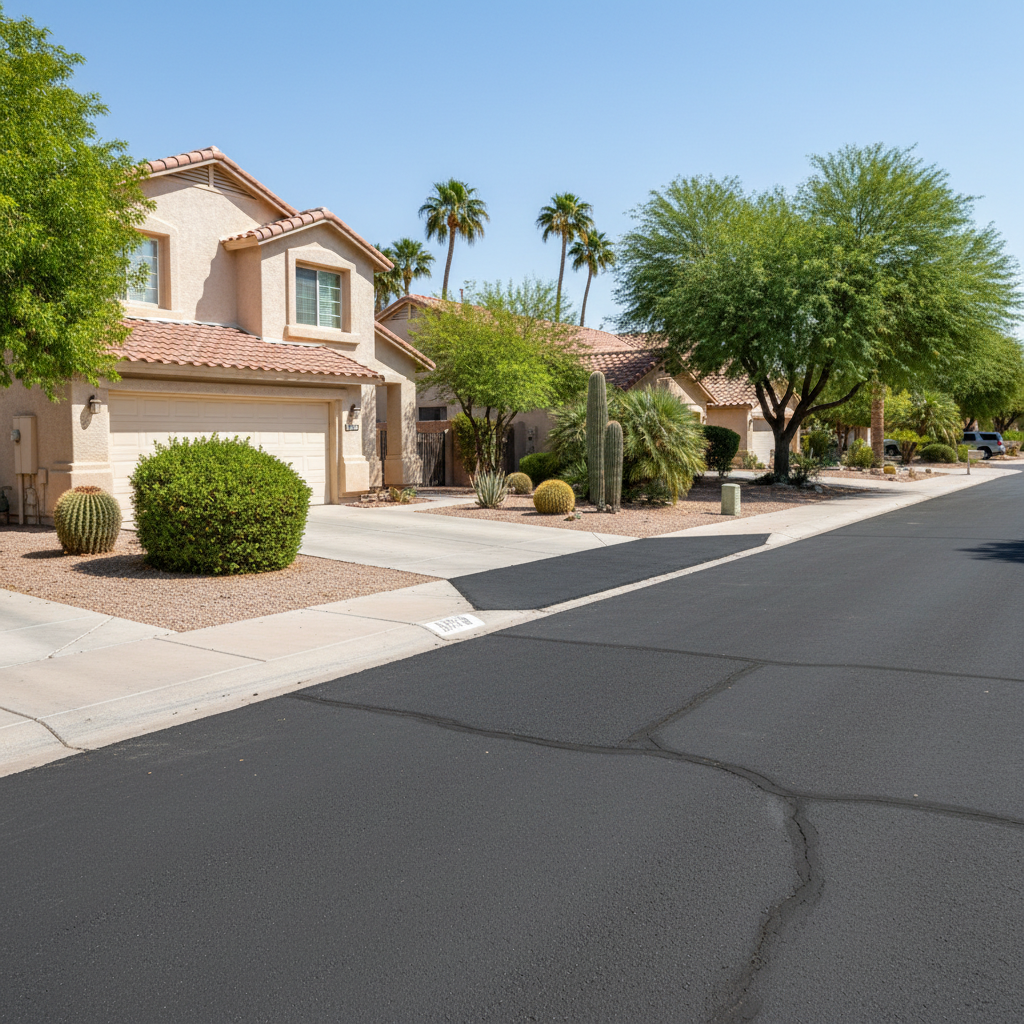
You've got cracks in your asphalt, right? Maybe a pothole's popped up in your driveway or parking lot. So you call someone, they patch it up, and a few months later—or maybe a year—it's back. The same crack, or a new one right next to it. It's frustrating, I know. You spend good money trying to fix something, and it feels like you're just throwing cash into a bottomless pit.
This isn't just bad luck. In Phoenix, especially, there are some real reasons why those patches fail, and understanding them is the first step to getting a fix that actually holds up. It's not always about the patch itself, you see, but what's happening underneath.
The Desert's Dirty Little Secrets: Why Patches Fail Here
We live in a unique environment, don't we? That scorching summer sun, the monsoon rains that hit hard and fast, and our unique soil conditions all play a role in how asphalt behaves. It's not like patching a road up in, say, Seattle.
- Expansive Clay Soils: A lot of Phoenix, especially areas like the older parts of Scottsdale or even some newer developments in the West Valley, sits on expansive clay soils. When these soils get wet, they swell up. Then, when they dry out, they shrink. This constant movement under your asphalt is a killer. It creates stress, and that stress finds the weakest point – often right where you just put a patch. If the underlying issue isn't addressed, that patch is just a Band-Aid over a broken bone.
- Extreme Temperature Swings: Our daily temperature swings are brutal. We can go from 115 degrees in the afternoon to 85 degrees at night. Asphalt expands when it's hot and contracts when it's cold. This constant push and pull, day after day, year after year, weakens the material. A patch that isn't properly bonded, or is too rigid for the surrounding pavement, will crack under this stress.
- Water Intrusion: Those monsoon downpours? They're not just a spectacle. Water is asphalt's worst enemy. If a crack isn't sealed properly before patching, or if the patch itself isn't watertight, water gets in. It seeps down to the sub-base, softens it, and then you've got a weak foundation. Add in the expansive soils, and you've got a recipe for disaster.
- UV Degradation: Our relentless sun doesn't just make us sweat; it breaks down the binders in asphalt. This makes the pavement brittle and more prone to cracking. A surface-level patch on an already degraded surface won't last because the surrounding material is already compromised.
What's the Right Way to Patch in Phoenix?
So, what's a homeowner or business owner to do? You can't change the weather or the soil, but you can change how you approach asphalt repairs. It's about understanding the problem, not just covering it up.
Full-Depth Repair: The Gold Standard
For most significant cracks, potholes, or areas of alligator cracking, a simple surface patch won't cut it. You need a full-depth repair. This means cutting out the damaged section of asphalt entirely, all the way down to the sub-base. Then, we inspect that sub-base. Is it soft? Is it moving? We'll stabilize it, compact it properly, and then lay new asphalt, compacting it in layers. This creates a strong, integrated repair that's designed to withstand our local conditions. It's more work, sure, but it's the only way to get a lasting fix.
The Importance of Proper Edges and Sealing
Even with a full-depth repair, the edges matter. You need clean, vertical cuts, and the new asphalt needs to be properly compacted against the old. Then, sealing the seams with a high-quality sealant is crucial. This prevents water from getting into those vulnerable spots. Think of it like sealing the windows on your house – you wouldn't just paint over a gap, would you?
Why Local Expertise Isn't Just a Buzzword
This is where local knowledge really counts. Someone who's only ever worked in a milder climate might not understand the nuances of Phoenix asphalt. They might not know about our expansive soils, or the specific types of aggregates that perform best in our heat. They might not use the right tack coat or compact the asphalt to the right density for our conditions.
At Omega Paving, we've been doing this for years, right here in the Valley. We've seen it all, from cracked driveways in Arcadia to crumbling parking lots in Glendale. We know what works and, more importantly, what doesn't, in our unique desert environment. We understand that a patch isn't just about filling a hole; it's about addressing the root cause of the damage and using materials and techniques that stand up to Phoenix's demands. Don't settle for a quick fix that'll just fail again. Invest in a repair that lasts.