Asphalt Overlay or Full Depth Replacement? What Phoenix Homeowners Need to Know
Got an old, cracked asphalt driveway or parking area that's seen better days? You're probably wondering if you can just slap a new layer on top, or if you need to rip the whole thing out and start fresh. It's a common question I get here at Omega Paving, especially with our intense Phoenix sun beating down on everything. So, let's talk about the two main options: an asphalt overlay or a full depth asphalt replacement.
The Asphalt Overlay: A Quick Fix or a Smart Move?
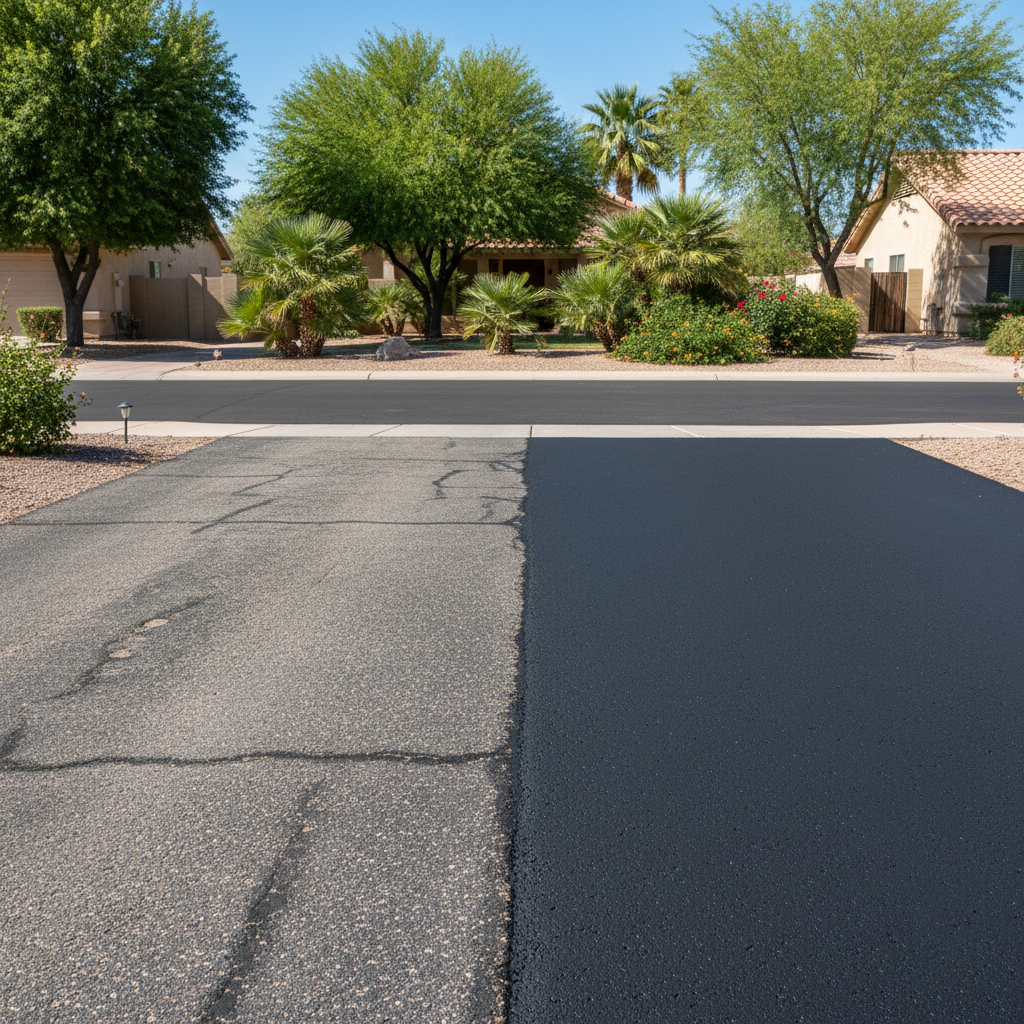
An asphalt overlay, sometimes called a resurface, is exactly what it sounds like: we clean and prep your existing asphalt, repair any major cracks or potholes, and then lay a new, fresh layer of asphalt right on top. Think of it like putting a new skin on an old body, really.
When an Overlay Makes Sense:
- Your existing asphalt is mostly structurally sound. It might have surface cracks (like alligator cracking) or fading, but the base underneath isn't failing.
- You're looking for a more budget-friendly option upfront. Overlays typically cost less than a full replacement because we're not doing as much digging and material removal.
- You need a quicker turnaround. An overlay project usually takes less time than tearing everything out.
The Downsides of an Overlay:
- It's not a permanent fix for underlying problems. If your base material is unstable, or you have serious drainage issues causing constant puddling, an overlay will just hide those problems for a while. They'll eventually show through the new layer; we call this "reflective cracking."
- It raises the grade of your pavement. This might not be a big deal, but sometimes it can affect drainage, or create a slight lip at garage entrances or property lines.
- Durability can be shorter than a full replacement, especially if the existing pavement wasn't in good shape to begin with.
Full Depth Asphalt Replacement: The Gold Standard
A full depth asphalt replacement means we tear out all the old asphalt. We'll even dig up the existing base material if it's compromised. Then, we build your pavement from the ground up. This involves compacting a new, stable base layer, and then laying down fresh asphalt.
When a Full Replacement Is Your Best Bet:
- Your existing asphalt is severely deteriorated. We're talking deep, wide cracks, significant potholes, areas that have sunk or heaved, or a base that's clearly failed. If you've got standing water issues in your driveway after a monsoon, that's a big red flag for your base.
- You want the longest-lasting solution. A properly installed full depth replacement, with a good base, can last 20-30 years or more with regular maintenance.
- You need to change the grade or drainage of your property. Maybe your driveway slopes towards your house, or you want to add a new parking area. A full replacement gives us the flexibility to re-engineer the entire surface.
- You're dealing with problematic soil conditions. We see a lot of that here in Phoenix, especially with our expansive clay soils in areas like the East Valley. A new, engineered base can better handle these challenges.
The Downsides of a Full Replacement:
- Higher upfront cost. It's a bigger investment because it involves more labor, material removal, and new base material.
- Longer project timeline. Tearing out old pavement and rebuilding just takes more time.
My Recommendation for Phoenix Homeowners
Look, I've been doing this a long time in the Valley, and I've seen it all. Our climate is brutal on asphalt. The intense UV rays, the extreme heat that softens the asphalt, and then the sudden downpours that can erode bases – it all takes a toll.
For most homeowners in Phoenix, if your asphalt is showing significant signs of distress beyond just surface cracks – if you've got potholes, areas that are sinking, or widespread alligator cracking that covers more than 25% of the surface – I'm almost always going to recommend a full depth asphalt replacement. Why? Because you want something that's going to last. An overlay might look good for a few years, but if the problem is underneath, it's going to come back, and you'll end up spending more in the long run.
Now, if your asphalt is relatively new, say 5-10 years old, and it's just got some minor surface cracking and fading, an overlay can be a perfectly good, cost-effective solution to extend its life. But you need to be honest about the condition of the existing pavement. Don't just cover up a major problem.
The best way to figure out what's right for your property is to have a professional come out and take a look. We'll assess the condition of your existing pavement, check the base, and talk about your budget and long-term goals. Here at Omega Paving, we'll give you a straight answer and a clear plan, so you can make the best decision for your home.